
The Ultimate Guide to Automotive Transponders and Car Key Technology

In today’s automotive industry, the humble car key has evolved far beyond a simple piece of metal. Modern vehicles rely on transponders, remote control fobs, and advanced immobilizer systems to ensure security, convenience, and seamless functionality.
Whether you are an automotive locksmith, a mechanic, or a curious car owner, understanding how transponders work—and how to replace, duplicate, or reprogram them—is essential. This article provides a comprehensive guide to automotive transponders, drawing insights from trusted sources like Transpondery.com and hands-on industry experience.
By the end, you’ll know:
- What a transponder key is and how it works
- The difference between OEM keys and aftermarket replacements
- How to program car remotes and fix synchronization issues
- The role of ECU pinouts in automotive electronics
- Where to find guides, catalogs, and emulator tools for professional use
What Is a Car Transponder Key?
A transponder key (short for “transmitter + responder”) is a type of car key with an embedded microchip. This chip communicates with the vehicle’s immobilizer system via radio frequency identification (RFID).
When the key is inserted or brought near the ignition, the immobilizer checks the unique code stored in the chip. If the code matches, the car starts. If not, the engine remains immobilized.
👉 In simple terms: Without a programmed transponder, your car won’t start—even if the key physically fits the ignition.
Why Transponder Keys Are Essential in the Automotive Industry
The introduction of transponder keys in the 1990s drastically reduced car theft. Unlike traditional keys that could be easily duplicated, transponder technology adds an electronic layer of security.
Benefits include:
- ✅ Enhanced security against hotwiring and unauthorized duplication
- ✅ Convenience with remote locking and unlocking
- ✅ Compatibility with advanced car electronics
Today, almost every vehicle manufacturer—from Audi and Volkswagen to Ford and Mercedes-Benz—uses some form of transponder-based system.
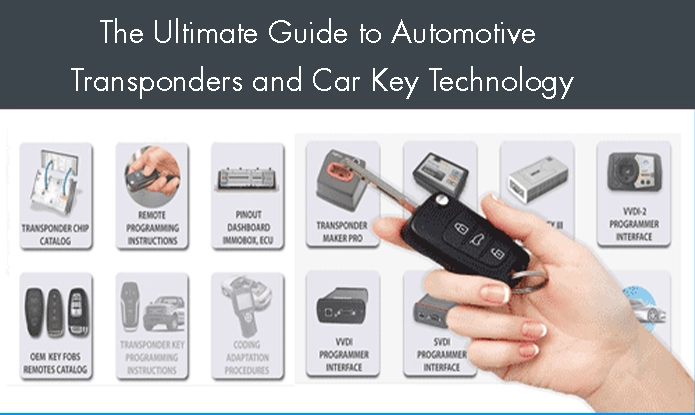
OEM Keys and Remote Control Catalogs
One of the biggest challenges in the automotive locksmith industry is identifying the correct key or remote for a specific vehicle. That’s where OEM catalogs come in handy.
At Transpondery.com, you’ll find detailed OEM catalogs for:
- Audi OEM Keys & Remotes
- Volkswagen OEM Keys & Remotes
- Seat OEM Keys & Remotes
- Skoda OEM Keys & Remotes
- Ford OEM Keys & Remotes
Each catalog provides valuable technical data, helping locksmiths and technicians choose the right remote or transponder chip for replacement.
👉 For professionals, this ensures accuracy and efficiency when sourcing or programming new keys.
Automotive Remote Programming Instructions
Have you ever changed the battery in your car remote and suddenly found it not working? This happens because the remote sometimes loses synchronization with the vehicle’s system.
Programming or re-syncing a remote fob usually involves a sequence of steps—such as turning the ignition on and off, pressing buttons in a specific order, or using a diagnostic tool.
Common tasks include:
- Programming a new remote control transmitter
- Re-syncing after battery replacement
- Adding extra keys to the system
👉 On Transpondery’s Remote Instructions page, you can find step-by-step guides for different makes and models, all tested by professionals in real automotive environments.
Automotive PinOuts Library – Understanding ECU Connections
The PinOuts Library is an invaluable resource for anyone working with Electronic Control Units (ECUs), immobilizers, and instrument clusters.
Pinout diagrams provide:
- Wiring connections for ECU modules
- Immobilizer circuit references
- Cluster and module communication layouts
These diagrams are essential for:
- ✅ Diagnosing faulty connections
- ✅ Programming new keys directly via ECU
- ✅ Repairing immobilizer issues
For beginners, think of PinOuts as a map of the electronic brain of your car.
Descriptions of Tools Used in Automotive Transponder Programming
Working with transponders requires specialized tools and programmers. Some of the most popular ones include:
🔹 TMPro
A professional programmer designed for key coding and immobilizer solutions.
🔹 VVDI2 & VVDI
Widely used by locksmiths for their versatility in programming transponders, remotes, and ECUs.
🔹 PCF PROG
Specialized in handling PCF79xx microcontrollers found in many automotive keys.
🔹 MASTER KEY III
An advanced tool for automotive key cloning and transponder programming.
👉 These tools are must-haves for automotive workshops and locksmith businesses.
Useful Files and Emulators for Automotive Electronics
When working with immobilizers and keys, technicians often rely on specialized files and emulator devices.
Some examples include:
- PCF79xx Files – “Virgin” files for resetting used keys
- VAG Immo Emulator – Works with Volkswagen, Audi, Seat, Skoda
- MB Immo Emulator – Designed for Mercedes-Benz vehicles
These tools allow professionals to renew used keys, bypass immobilizers, and experiment safely with automotive electronics.
Car Key Replacement: What to Do if You’re Locked Out
Imagine this scenario: you’re locked out of your car or you’ve lost your only transponder key. What are your options?
- Contact a professional automotive locksmith – They can provide same-day service.
- Visit your dealership – Usually more expensive, but guaranteed OEM keys.
- Search for “duplicate car key maker near me” – Quick local solutions.
💡 Pro Tip: Always have a spare transponder key made in advance. It’s far cheaper than an emergency replacement.
Transponder vs. Chip Key Replacement – What’s the Difference?
While many use the terms interchangeably, there’s a subtle difference:
- Transponder Key → Has an embedded chip that communicates with the immobilizer.
- Chip Key Replacement → Refers to replacing the chip itself or reprogramming a key when the chip is damaged.
Both require professional tools and expertise.
The Future of Automotive Keys
As the automotive industry moves towards keyless entry and push-start systems, transponders continue to evolve.
Trends include:
- Smart keys with proximity sensors
- Mobile apps replacing physical keys
- Biometric authentication (fingerprint & face recognition)
However, traditional transponder technology remains widely used and will continue to be relevant for years to come.
Conclusion
From OEM key catalogs to remote programming instructions and ECU pinouts, understanding transponder systems is vital in today’s automotive landscape.
Whether you’re an automotive technician, a locksmith, or a car owner looking for guidance, resources like Transpondery.com provide accurate, hands-on knowledge that saves time, reduces costs, and ensures proper functionality.
🚗🔑 In short: A car key is no longer just a key—it’s an electronic passport to your vehicle.
🔹 Linking Suggestions
- Transpondery.com – Catalogs & Guides
- Autoskil.com – Control Units & Communication
- NHTSA.gov – Vehicle Security Standards