
What is a CAN Bus System? A Beginner’s Guide to Automotive CommunicationWhat is a CAN bus system ?

Introduction: Why the CAN Bus Matters
Modern vehicles are no longer just mechanical machines; they are rolling computers on wheels. Every function from engine performance and braking to comfort features like air conditioning and infotainmentdepends on electronic communication between dozens of control units.
This communication is made possible through the CAN bus system (Controller Area Network), often described as the “data superhighway” of automobiles. But what exactly is the CAN bus system, and why is it so important for the automotive industry?
In this detailed guide, we will explain what a CAN bus system is, how it works, its advantages, its different types, and why every modern vehicle depends on it.
What is a CAN Bus System?
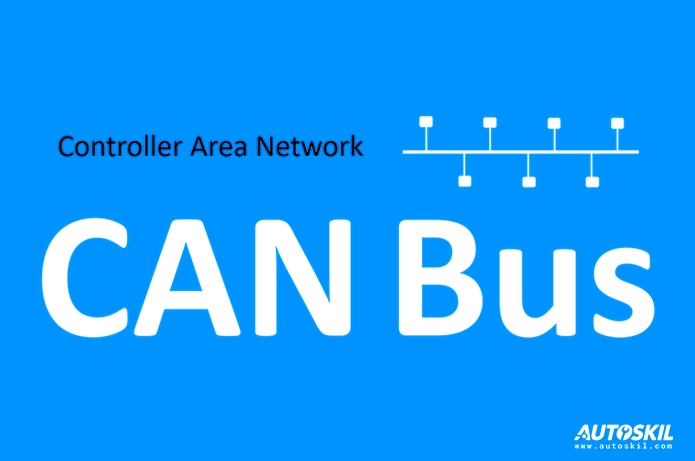
The term CAN bus stands for Controller Area Network bus, a digital communication protocol developed by Bosch in the 1980s. It was designed to allow multiple electronic control units (ECUs) in a vehicle to communicate with each other without needing a complex web of point-to-point wiring.
Instead of running separate wires for every signal, the CAN bus uses a single two-wire system where all modules (engine control, ABS, airbags, steering, infotainment, etc.) are connected in parallel.
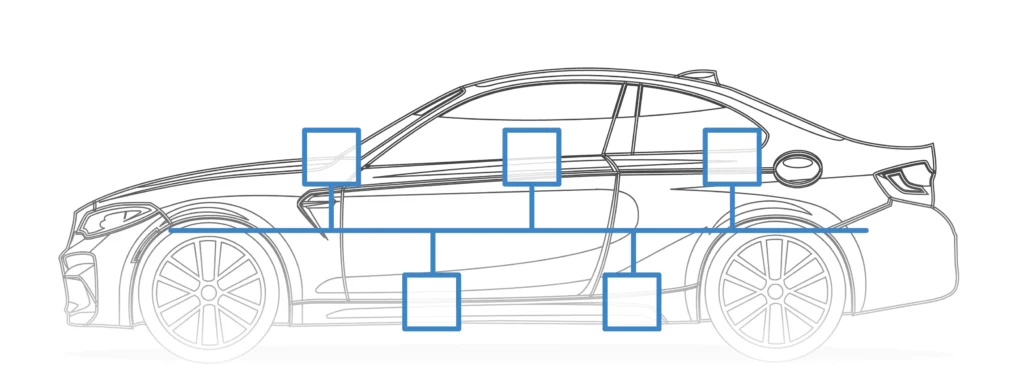
👉 Think of it like a city’s high-speed highway where cars (data packets) travel in lanes (CAN wires), delivering information quickly and efficiently.
How Does the CAN Bus Work?
At its core, the CAN bus system works as a communication protocol that allows all ECUs to send and receive data in real time.
- Each ECU acts like a node on the network.
- Data is transmitted in frames that contain identifiers, priorities, and information.
- Unlike traditional systems, every ECU can read the same data at the same time, ensuring synchronization.
For example:
- The steering angle sensor sends its position via CAN.
- The ESP (Electronic Stability Program) control unit receives this data and combines it with wheel speed data.
- The system then makes real-time decisions to keep the car stable.
Advantages of the CAN Bus System
The automotive CAN bus system is widely used because of its reliability, efficiency, and flexibility. Key advantages include:
1. Reduced Wiring Complexity
Instead of multiple point-to-point connections, the CAN bus simplifies wiring by using a shared communication channel, reducing weight and cost.
2. High Data Transmission Speed
CAN supports speeds up to 1 Mbit/s, enabling real-time communication between control units.
3. High Security & Error Detection
Transmission errors are detected instantly with high reliability, ensuring safety-critical systems (like brakes and airbags) operate without failure.
4. Flexibility & Scalability
The system can connect dozens of ECUs and sensors, making it easy to integrate new features without redesigning the entire electrical system.
5. Diagnostic Capabilities
The CAN bus supports on-board diagnostics (OBD-II), allowing mechanics to check fault codes across multiple systems at once.
Types of CAN Bus Systems in Vehicles
Not all CAN buses operate at the same speed. Automakers divide them into categories depending on the application:
🔹 High-Speed CAN (500 Kbit/s – 1 Mbit/s)
- Used for safety-critical functions.
- Examples: Engine control, ABS, airbag systems.
🔹 Low-Speed CAN (100 Kbit/s)
- Used for comfort and convenience features.
- Examples: Power windows, seat adjustment, lighting.
🔹 Infotainment CAN (100 Kbit/s)
- Dedicated to multimedia systems.
- Examples: Radio, navigation, entertainment.
CAN Bus in a Vehicle: A Real-World Example
Imagine a modern car equipped with three ECUs:
- Engine Control Unit
- Airbag Control Unit
- Door Control Unit
Without CAN, each system would need separate wiring. With CAN, they communicate over the same two-wire network. For instance:
- If a crash occurs, the airbag ECU instantly communicates with the door control unit to unlock the doors, while sending engine data to cut fuel supply.
This interconnected communication ensures faster, more reliable vehicle response.
Key Characteristics of the CAN Bus System
The design of the CAN bus system ensures:
- High Security → Detects and corrects transmission errors.
- High Availability → If one ECU fails, others continue working.
- High Data Density → All ECUs share synchronized data.
- High Speed → Near real-time data transmission.
CAN Bus vs. Traditional Wiring Systems
| Feature | Traditional Wiring | CAN Bus System |
|---|---|---|
| Wiring | Complex, heavy | Simplified, lightweight |
| Communication | Point-to-point | Shared network |
| Speed | Slow | High-speed (1 Mbit/s) |
| Diagnostics | Limited | Centralized & advanced |
| Scalability | Difficult | Easy to expand |
Common Applications of CAN Bus in Automobiles
- Engine Management: Fuel injection, turbo control.
- Safety Systems: Airbags, ABS, ESP.
- Comfort Features: Climate control, seat adjustments.
- Infotainment: Navigation, audio, connectivity.
- Advanced Systems: Autonomous driving sensors, ADAS.
CAN Bus and Vehicle Diagnostics
Mechanics use diagnostic tools to read fault codes via the CAN bus.
- OBD-II scanners can detect errors across multiple ECUs simultaneously.
- Some advanced tools even use CAN to Ethernet converters for faster diagnosis.
This makes troubleshooting much quicker compared to older systems.
The Future of CAN Bus Systems
With cars becoming smarter and more connected, the CAN bus remains essential. However, new protocols like FlexRay, Ethernet, and MOST are emerging for high-bandwidth applications such as autonomous driving.
Still, the CAN bus is expected to remain the backbone of automotive communication for decades, thanks to its reliability and cost-effectiveness.
Conclusion
The CAN bus system is the silent hero behind modern vehicles, enabling seamless communication between dozens of electronic components. Without it, advanced safety features, infotainment systems, and efficient diagnostics would not be possible.
Next time you start your car and see everything working in harmony, remember that the CAN bus is the invisible “data highway” making it happen.
- Link to related articles like: