

Ultimate Tire Size Guide: How to Choose the Perfect Rims and Tires Like a Pro

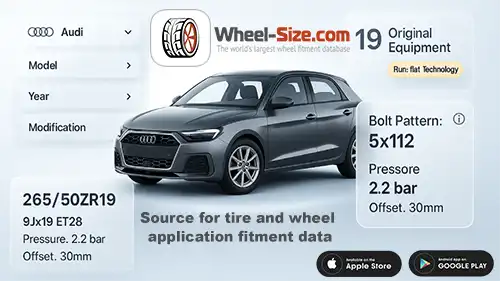
Searching for a reliable Tire Size Guide is the first step toward optimizing your vehicle’s performance and safety. Imagine driving on a highway in the Middle East, where summer temperatures can push tires to their physical limits. Have you ever wondered if your current setup is truly engineered for such conditions? Choosing the right wheels isn’t just about aesthetics; it’s a critical engineering decision. In this comprehensive 1,000-word guide, we will explore everything from sidewall markings to complex fitment calculations.
By using this Tire Size Guide, you will learn how to leverage professional tools like Wheel-Size.com. We will bridge the gap between simple tire replacement and professional automotive engineering, ensuring your car remains fuel-efficient and safe.
1. Why Technical Accuracy in Tire Fitting is Vital
Most drivers view tires as simple rubber circles, but in mechatronics, they are considered the primary damping element of the suspension system. If the size is incorrect, the entire geometry of the vehicle changes. For more on how this affects your car’s health, check our suspension maintenance basics.
The Consequences of Incorrect Sizing:
- Scrub Radius Alteration: Changing the wheel offset shifts the steering axis, which can cause the car to pull to one side during braking.
- Transmission Stress: For AWD (All-Wheel Drive) vehicles, mismatched tire diameters can destroy the center differential due to constant speed differences between axles.
- Electronic Interference: Modern cars rely on wheel speed sensors for ABS and ESP. A diameter change exceeding 3% can trigger “limp mode” or ghost fault codes.
2. Decoding the Sidewall (Beyond the Basics)
This section of our Tire Size Guide breaks down the alphanumeric string found on every tire. Let’s analyze 225/50R17 98V:
| Component | Detailed Explanation |
|---|---|
| 225 | The section width in millimeters from sidewall to sidewall. |
| 50 | Aspect Ratio: The height is 50% of the 225mm width. |
| 17 | Rim Diameter: The size of the wheel the tire is designed to fit. |
| 98V | 98 is the Load Index (750kg), and V is the Speed Rating (240 km/h). |
💡 Pro Tip: In Gulf countries (KSA, UAE, Qatar), never overlook the Traction AA and Temperature A ratings. These indicate the tire’s ability to stop on wet roads and its resistance to heat generation—vital for desert climates.
3. Understanding Wheel Offset (ET) and Backspacing
One of the most ignored parts of any fitment manual is the Offset. Measured in millimeters, the offset is the distance from the hub mounting surface to the center line of the wheel.
- Positive Offset: The mounting surface is toward the front (street side) of the wheel. Common in FWD cars.
- Negative Offset: The mounting surface is toward the back of the wheel, giving it a “deep dish” look. Common in off-road trucks.
- Zero Offset: The mounting surface is even with the centerline.
If you choose the wrong offset, your tires might rub against the internal brake calipers or hit the outer fender during a turn. This is why a digital Tire Size Guide is essential before purchasing new rims.
4. Leveraging the Wheel Size App for Modern Vehicles
To simplify these calculations, the Wheel Size App provides a mobile database updated for 2025-2026 models. It allows you to visualize how a new tire setup will fit without spending a penny at the shop.
Millimetric precision for 2026 vehicle models.
Download the Professional Tools:
- Wheel Size for Android – Ideal for garage use.
- Wheel Size for iOS – Reliable iPhone fitment data.
5. The “Plus Sizing” Strategy: Going Bigger Safely
Plus sizing is the practice of increasing the rim diameter while decreasing the tire’s profile (sidewall height). For example, moving from a 16-inch wheel to an 18-inch wheel. When done correctly, this improves steering response and stability. However, the Tire Size Guide rule remains: keep the overall tire diameter within 3% of the original Equipment (OE) size.
Technical Checkpoint: Always verify the Center Bore. If the hole in the center of the wheel is larger than your car’s hub, you must use “Hub Centric Rings” to prevent dangerous vibrations at high speeds. For more technical details, read our guide on wheel alignment engineering.
6. Expert FAQ: Critical Answers for Drivers
Q: Can I mix different tire sizes on the same axle?
A: Absolutely not. This creates uneven traction and can cause the vehicle’s stability control to malfunction. Always replace tires in pairs or, ideally, as a full set of four.
Q: How long do tires last in hot climates like Riyadh or Dubai?
A: Even if the tread looks good, rubber undergoes “Dry Rot” due to UV exposure and heat. We recommend replacing tires every 4 to 5 years in these regions. Check the DOT date code; for example, “1226” means the 12th week of 2026.
Conclusion
Mastering your vehicle’s fitment requires more than just looking at a price tag. By following this Tire Size Guide and using data-driven apps, you ensure that every mile you drive is backed by sound engineering. Don’t leave your safety to chance – consult the experts and verify your specs before your next upgrade.
