

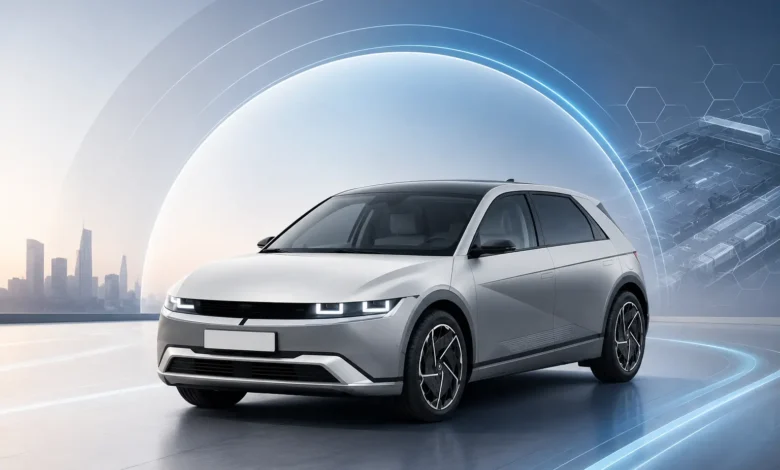
Navigating the volatile electric vehicle market has felt like a high-stakes guessing game for American drivers. Just when consumers thought shifting federal EV policies and localized dealership markups had stabilized MSRPs, a major corporate restructuring has completely rewritten the domestic playbook. If you have been waiting for the ideal moment to upgrade to a premium electric crossover, your patience has officially paid off. In an aggressive move to dominate the North American market, factory-level balance sheets show a massive adjustment in the highly anticipated 2027 Hyundai Ioniq 5 price matrix, slashing costs by up to $1,180 on high-volume trims.
This is not merely a seasonal dealership clearance; it is a meticulous, factory-level overhaul of trim configurations designed to undercut domestic tech giants and luxury EV rivals. By engineering cost efficiencies directly into the vehicle’s manufacturing blueprint, Hyundai is passing structural savings straight to the American consumer. Whether you are tracking powertrain optimizations or looking for the ultimate value sweet spot, this comprehensive breakdown will dissect the real-world implications of the refreshed 2027 model year rollout.
📰 Inside This Deep Dive:
- 🔹 1. Deciphering the Remodeled 2027 Trim Architecture for US Buyers
- 🔹 2. The Math Behind the $1,180 American Price Reduction
- 🔹 3. Comprehensive Pricing Matrix & Trim Analysis (In USD)
- 🔹 4. Benchmark Breakdown: Car and Driver Real-World Test Results
- 🔹 5. Hardware & Software Optimization: Under the Hood
- 🔹 6. Frequently Asked Questions (FAQ)
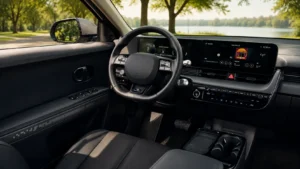
2025 Hyundai Ioniq 5 interior photos.
1. Deciphering the Remodeled 2027 Trim Architecture for US Buyers
To fully understand why the 2027 Hyundai Ioniq 5 price shift is turning heads across automotive newsrooms, one must first look at how the product developers have rationalized the vehicle’s model tiers. Instead of relying on aging option packages, Hyundai has dynamically split the line to address distinct consumer lifestyles across the United States. The entry point and the long-range flagships are no longer bound by legacy supply-chain bottlenecks.
For the Standard Range buyer, simplicity reigns supreme. The previous baseline variations have been integrated into a singularly focused, high-utility tier known as the E-Value+ trim. This variant streamlines peripheral costs while maximizing foundational battery density, delivering an accessible benchmark for urban commuters traveling through congested metropolises like New York or Los Angeles.
Conversely, the highly coveted Long Range variant—the configuration most preferred by American drivers managing inter-state commutes—now expands into five highly targeted trim levels:
- E-Lite: A fleet-friendly, streamlined long-distance configuration designed for ultimate range-per-dollar efficiency.
- Modern: The newly optimized sweet spot of the lineup, directly inheriting and refining the core competencies of the previous Exclusive package.
- Premium: An upscale mid-tier variant balancing advanced active safety telemetry with upgraded cabin acoustics.
- Inspiration: The quintessential luxury showcase boasting top-tier driver assistance, next-generation display interfaces, and premium material finishes perfect for long American road trips.
- N Line: A visually aggressive, performance-tuned package that bridges the gap between everyday utility and track-inspired aesthetics for performance enthusiasts.
2. The Math Behind the $1,180 American Price Reduction
Automotive price reductions are often dismissed as smoke-and-mirrors marketing ploys, but the mathematical reality of the latest 2027 Hyundai Ioniq 5 price drops reveals calculated, surgical precision. Hyundai has targeted the exact tranches of the market where consumer volume is highest, maximizing their leverage against market fluctuations in North America.
The headline-grabbing update belongs exclusively to the Modern trim, which boasts a definitive price reduction of approximately $1,180 (equivalent to a 1.6 million won factory adjustment). This fiscal decompression was achieved by thoroughly auditing the legacy built sheets. Engineers identified highly specific hardware components and sensory options that added significantly to factory cycle times but registered low on real-world utility surveys. By standardizing these sub-assemblies, production costs plummeted without eroding the car’s structural or range integrity.
Moving further up the luxury ladder, the Premium trim receives a substantial $660 price reduction (equivalent to a 900,000 won factory drop). Positioned as a direct refinement of the older Prestige trim, this price drop reflects optimized component mapping within the vehicle’s secondary digital sub-systems. This strategic trim realignment allows tech-savvy drivers to access high-end luxury parameters at a considerably more manageable price point.
When analyzing these global MSRP rollouts adjusted for the American consumer, buyers should view them as structural indicators. When a manufacturer slashes prices on mid-tier variants like the Modern or Premium trims by these specific dollar margins, it signals an industrial transition toward high-volume automation. For consumers, opting for these specific configurations maximizes your residual value retention down the road, as you are purchasing high-level hardware architectures that have already absorbed their primary development depreciation at the factory level.
3. Comprehensive Pricing Matrix & Trim Analysis (In USD)
To accurately visualize your potential capital outlay-especially when calculating state incentives, localized dealer discounts, or clean-vehicle subsidies-here is the complete, estimated financial breakdown of the global 2027 vehicle rollout translated into US dollars:
| Battery / Powertrain Platform | Official Trim Designation | Estimated MSRP Equivalent (USD) | Market Optimization Status |
|---|---|---|---|
| Standard Range Variant | E-Value + | $34,900 | Includes localized environmental tax benefits |
| Long Range Variant | E-Lite | $37,300 | Streamlined long-range baseline |
| Modern | $38,950 | Reduced by $1,180 at Factory 📉 | |
| Premium | $42,900 | Reduced by $660 at Factory 📉 | |
| Inspiration | $45,300 | Maximized luxury tech & radar amenities | |
| N Line | $43,800 | Aero-kit & sport-tuned damping performance |
4. Benchmark Breakdown: Car and Driver Real-World Test Results
To ground these corporate pricing updates into tangible performance data, we must look at the official instrumental testing data provided by America’s gold standard of automotive testing Car and Driver. Looking closely at the ruggedized, adventure-ready all-wheel-drive platform, the empirical metrics showcase why this E-GMP architecture remains highly disruptive.
🔧 Official Hard Specifications Sheet
📋 Vehicle Architecture & Layout:
- Vehicle Type: Front- and rear-motor, AWD, 5-passenger, 4-door wagon/crossover
- Curb Weight: 4,673 lbs
- Wheelbase: 118.1 inches | Length: 183.3 inches
- Width: 74.4 inches | Height: 64.0 inches
⚡ Powertrain & Battery Diagnostics:
- Front Motor: Permanent-magnet synchronous AC, 99 hp
- Rear Motor: Permanent-magnet synchronous AC, 221 hp
- Combined Output: 320 hp / 446 lb-ft of Torque
- Battery Pack: Liquid-cooled Lithium-Ion, 84.0 kWh
- Peak DC Fast-Charge Rate: 250 kW
🏁 Car and Driver Dynamic Test Track Metrics
⏱️ Acceleration & Real-World Velocity:
- 0 to 60 mph: 4.5 seconds *(extremely rapid throttle response)
- 0 to 100 mph: 13.1 seconds
- 1/4-Mile Sprint: 13.3 seconds @ 101 mph
- Top Speed: 117 mph (Governed limited control)
- Rolling Start (5–60 mph): 4.7 seconds
🔋 Real-World Efficiency & Charging Realities:
- Observed Fuel Economy: 74 MPGe
- 75-mph Real Highway Range: 200 miles
- EPA Fuel Economy (Comb/City/Hwy): 94 / 103 / 85 MPGe
- Average DC Fast-Charge Rate (10–90%): 141 kW
- DC Fast-Charge Time (10–90%): Exactly 30 minutes
During absolute high-speed stabilization trials, the vehicle recorded a 70–0 mph stopping distance of 188 feet, and a 100–0 mph emergency stop of 416 feet, rolling comfortably on Continental CrossContact ATR 235/60R-18 all-terrain performance tires, producing a sturdy roadholding grip of 0.80 g on a 300-ft skidpad.
5. Hardware & Software Optimization: Under the Hood
From a strict powertrain engineering perspective, reducing retail prices while simultaneously improving vehicle utility requires complex micro-electronic adjustments. The updated iteration benefits immensely from an upgraded Battery Management System (BMS) kernel, which optimizes the thermodynamic cycles within the lithium-ion matrix during fast-charging sequences across American charging networks.
Automotive software engineers and diagnostic specialists analyzing the underlying E-GMP platform developments have detailed several key enhancements:
- Refined ECU Thermal Remapping: The software maps governing the cooling pumps have been completely recalibrated. This preserves long-term battery health metrics even when subjected to consistent high-output 800V DC fast chargers across the US.
- Enhanced Immobilizer Cryptography: Addressing security concerns in major US cities, the vehicle’s control networks feature updated cryptographic signatures, drastically reducing vulnerabilities to signal-cloning exploits.
- Kinetic Energy Harvesting Re-tuning: The regenerative braking software matrices have been smoothed out, extracting extra watt-hours per mile during stop-and-go highway traffic without imposing jerky deceleration profiles on the cabin occupants.
6. Frequently Asked Questions (FAQ)
Q1: What is the exact price reduction on the 2027 Hyundai Ioniq 5 Modern trim?
A: The Modern trim features a price reduction of approximately $1,180. This correction was enabled by optimizing structural build parameters inherited from older packages, cutting out production redundancies at the factory level.
Q2: What are the real-world 0-60 mph acceleration times verified by Car and Driver?
A: According to instrumental tests by Car and Driver, the dual-motor powertrain configuration clocks a highly impressive 0 to 60 mph time of just 4.5 seconds, delivering immediate electric torque delivery.
Q3: How long does it take to fast-charge the 84.0 kWh battery pack from 10% to 90%?
A: In track testing conditions, the vehicle sustained an average DC fast-charging rate of 141 kW, successfully replenishing the battery from 10% up to 90% capacity in exactly 30 minutes.
Ultimately, the recalibrated 2027 Hyundai Ioniq 5 price ecosystem serves as an undeniable proof of concept for the broader American marketplace: transitioning to sustainable infrastructure doesn’t have to require soaring consumer premiums. By deploying masterful manufacturing efficiencies and solidifying track performance metrics, Hyundai continues to anchor its dominance, delivering elite-tier engineering at prices that keep the legacy establishment on their toes.